
Saturday Morning
There were pancakes, and there was dancing in the kitchen.
Before everything changed
Every Saturday, Maya made pancakes. Marcus burned the first one, the way he always did. And somewhere between the batter and the syrup, Zeke would start dancing — five years old, all elbows and joy, narrating a story only he could see.
He loved dinosaurs. He drew volcanoes that erupted in red and orange crayon. He asked questions faster than anyone could answer them.
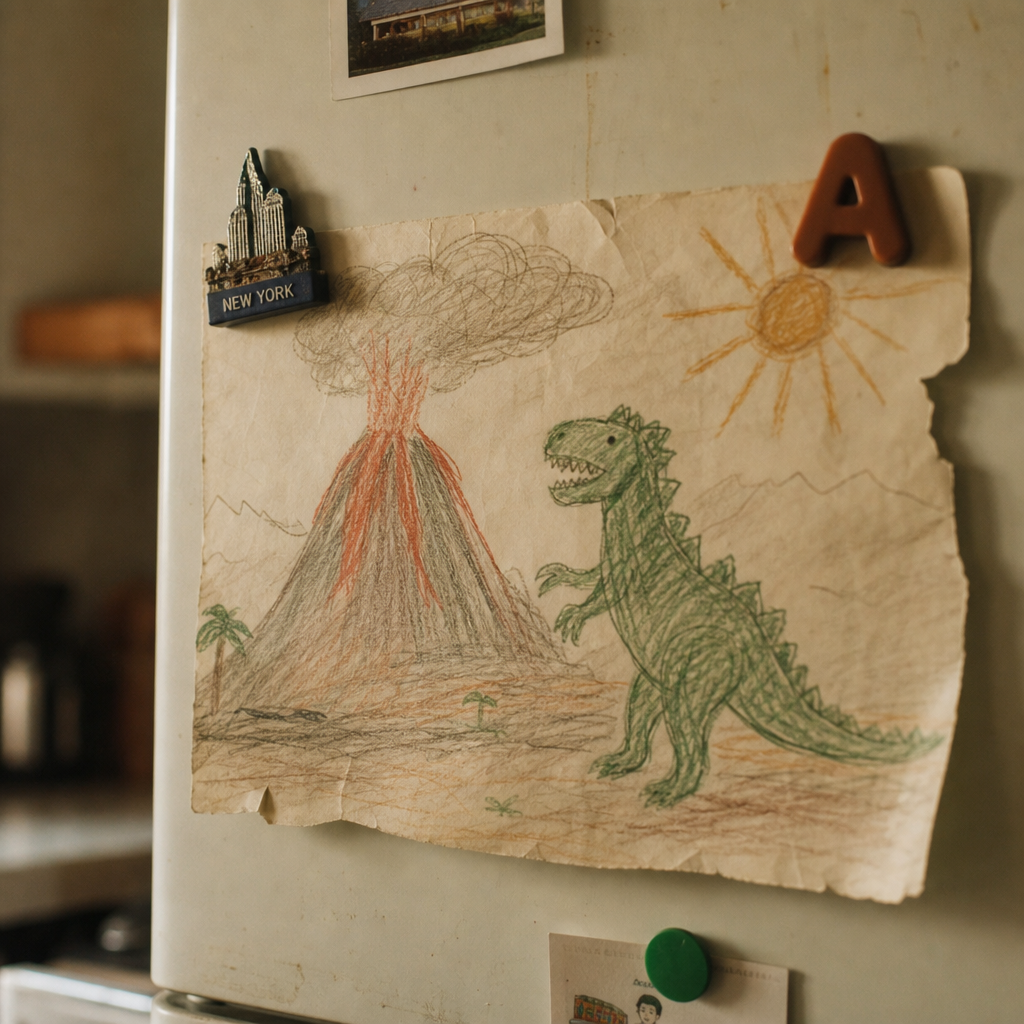
The volcano stayed on the refrigerator. No one ever thought to take it down.
The Call
It was an ordinary Tuesday. Maya was at the clinic, mid-shift, when her phone rang.
A sudden illness. Hours, not days. The kind of thing that doesn't seem possible until it is already true.
By morning, the house was a different house.
What follows is not a clinical case. It is one family's grief — and, woven gently through it, what we have come to understand about how grief can sometimes change shape.
Home Again — the first weeks
The casseroles came. Then the cards. Then the slow, strange quiet after the world decided it was time to move on.
Maya woke each morning to a few merciful seconds of forgetting, and then the remembering. Marcus held her, and held himself together, and some nights neither of them slept at all.
They cried until they couldn't. They were furious at nothing and everything. They felt, at times, completely numb.
Grief is unique to every person. There is no “correct” way to carry it, and no calendar that tells it when to ease.

Maya kept the door to Zeke's room closed. It was easier, she told herself, than walking past it.
Three Months Later
Marcus went back to his classroom. He found that he could teach a lesson on the French Revolution and grade thirty essays and still, somehow, breathe. Grief sat beside him, but it let him work.
Maya went back to the clinic too. But she took the long hallway to avoid the pediatric wing. She stopped answering calls from the friends whose children were Zeke's age. The volcano drawing was still on the refrigerator; she had started eating in the other room.
What do you notice changing in Maya?

The Seasons Change
Summer became autumn became winter. The world kept its appointments. Maya could not.
The grief was not loosening its grip. If anything, it had moved into the center of everything — a constant ache of longing for Zeke, a pull toward the door she still kept closed.
Marriage
Maya and Marcus grieved in different rhythms, and the distance between them grew.
Friendships
Invitations slowed, then stopped. It was easier to say no.
Work
Maya took more sick days. Focus slipped through her fingers.
Daily life
Meals, sleep, and small routines came undone and stayed that way.
Identity
“I was his mother,” she said. “I don’t know who I am now.”

One Year Later
He would have been six. Maya bought the candles. She could not bring herself to light them.
A year is a number the world seems to trust. People expected Maya to be, if not healed, then somehow further along. Instead, the ground beneath her had not shifted at all.
Marcus saw it most clearly. His own grief had changed — heavy, but livable. Hers had not moved. One evening he sat down beside her and said the thing he'd been afraid to say: “I think we need help.”
Read slowly. You may already recognize what a clinician would.
A part of herself was gone
“I was his mother.” The role that defined her felt severed.
It still did not feel real
A year on, some mornings she still half-expected to hear him.
She avoided the reminders
The closed door. The other room. The friends she no longer called.
The pain stayed sharp
Not softening with time, but waiting, raw, every single day.
Life felt impossible to re-enter
Plans, interests, the future — all of it felt out of reach.
Numbness, and a loneliness nothing reached
Even beside Marcus, she felt sealed away. Some days, life felt without meaning.
What has changed since the Saturday morning we began with?

A Conversation
The room had two soft chairs and a window. Dr. Ellis did not reach for a clipboard. She reached for Zeke's name.
The assessment
“Tell me about him,” the psychologist said. So Maya did — the pancakes, the volcanoes, the dancing. For the first time in a year, she was allowed to simply be his mother in the room.
Then, gently, the questions. How are you sleeping? What do the days feel like? What do you find yourself avoiding? Dr. Ellis was listening for something specific — not whether Maya was grieving, but how her grief was shaped.
Telling grief apart from what can look like it
A careful clinician distinguishes between conditions that overlap. They can also occur together — which is why assessment matters.
Typical grief
Grief can come in waves. It may include yearning, sadness, anger, disbelief, or numbness, but over time many people begin to find moments of connection, meaning, and daily functioning again.
Prolonged grief disorder
Grief that remains intense, persistent, and life-disrupting after the expected time period, centered on longing for or preoccupation with the person who died.
Major depression
A broader pattern of depressed mood, loss of pleasure, hopelessness, or low self-worth that may extend beyond the loss itself. Depression and prolonged grief disorder can also occur together.
PTSD
Often organized around fear, threat, intrusive trauma memories, avoidance, and hyperarousal. In prolonged grief disorder, the emotional center is usually the absence of the person who died.
For Maya, the picture pointed toward prolonged grief - not because she missed Zeke, but because her grief had remained intense, persistent, and life-disrupting over time.
Maya was not alone in this, even when she felt most alone
5-16%
in one cross-national review, estimates ranged from about 5% in probability samples to 16% in non-probability samples
Risk can rise
after sudden, violent, or unnatural deaths, after the loss of a child or partner, and when grief begins with fewer supports
Not one number
rates vary by culture, criteria, assessment method, sampling method, age, gender, and socioeconomic context
Looking for Answers
Naming it changed something. Not the loss — the loss was permanent — but the path. Dr. Ellis explained that prolonged grief is treatable, and that the goal was never to “get over” Zeke.
The goal was to carry him differently. To let love stay while the pain loosened its grip enough for Maya to live again.
What helps, and what the evidence shows
The leading approach
Prolonged Grief Therapy
A structured psychotherapy developed specifically for prolonged grief. It helps people gradually face the reality of the loss, reduce avoidance, reconnect with life, and carry the relationship with the person who died in a different way.
A related path
Grief-focused CBT
CBT-based grief treatments often work with painful memories, guilt, avoidance, meaning, social connection, and future goals. These approaches do not ask people to "move on." They help grief become less life-dominating.
Medication
When depression or anxiety are also present
No medication is approved specifically to treat prolonged grief disorder itself. Antidepressants may be helpful when depression or anxiety are also present, but they are not considered a primary treatment for grief-specific symptoms. Side effects vary by medication and may include nausea, vomiting, weight changes, diarrhea, sleepiness, sleep changes, or sexual side effects. A prescriber should explain risks, benefits, and alternatives.

Hope
Healing did not mean forgetting. It meant making room to live alongside the love.
It was slow. There were weeks that felt like going backward. But one Saturday, months into therapy, Maya woke to the smell of something burning. Marcus, in the kitchen, ruining the first pancake the way he always had.
She laughed before she cried. Then she walked down the hall and opened Zeke's door, and let the morning light back in.
The volcano is still on the refrigerator. Now, sometimes, they talk about him on purpose — and the talking, at last, feels like keeping him close rather than losing him again.
How might this story feel for another parent?
If any of this sounds like you, or someone you love
There is no deadline on grief, and reaching out is not giving up on the person you lost. It can be worth speaking with a doctor or a grief-informed mental health professional if:
- It has been a year or more, and the grief feels just as consuming as the first weeks.
- You find yourself avoiding the people, places, or reminders tied to your loss.
- Daily life - work, relationships, caring for yourself - feels impossible to return to.
- You feel that part of you died too, or that life no longer holds meaning.
- You have thoughts of not wanting to live, wanting to die, or wanting to be with the person who died.
A clinician can help tell ordinary grief from something that may need more care — and prolonged grief disorder is treatable. Asking is a way of honoring the love, not leaving it behind.
If you are in immediate danger or may harm yourself, contact emergency services or a crisis line right away. In the U.S., you can call or text 988 for the Suicide & Crisis Lifeline.